


In my fascination for non-standard border crossings, I have prepared another post on border-crossings: a 4th border crossing between the Netherlands and Belgium.
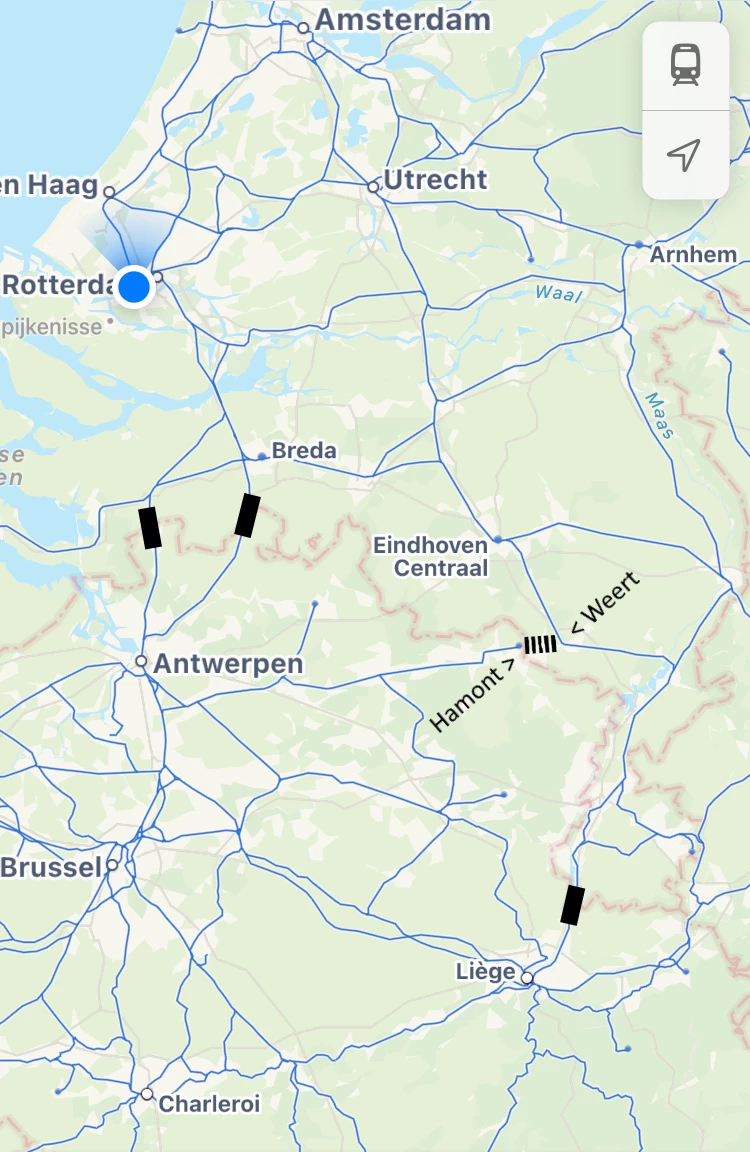
As you can see from Apple's impeccably clear railway map, there are only 3 border crossings with passenger trains operating on them between the two countries: two in the very West (one high-speed, the other traditional), both leading to Antwerp, and one in the very Southeast between Maastricht and Liège. These are very far apart and hardly an alternative to each other.
There could be all sorts of reasons why you want to avoid them:
- off the throdden path
- avoiding expensive tickets/reservations on the high-speed line, especially when last-minute or with time-flexibility
- avoiding line closures due to engineering works or (busy) replacement buses
- you have to get to Eindhoven Airport from Belgium but the Dutch trains are on strike
- … (fill in for yourself)
As the railway map already suggests, there is a fourth crossing somewhere in the middle, approximately between Eindhoven and Hasselt: the track is still there but it is a freight line. The 2 countries are in dispute about resuming local traffic. It won't be a busy line but it makes the network more resistant to incidents (and there have been!).
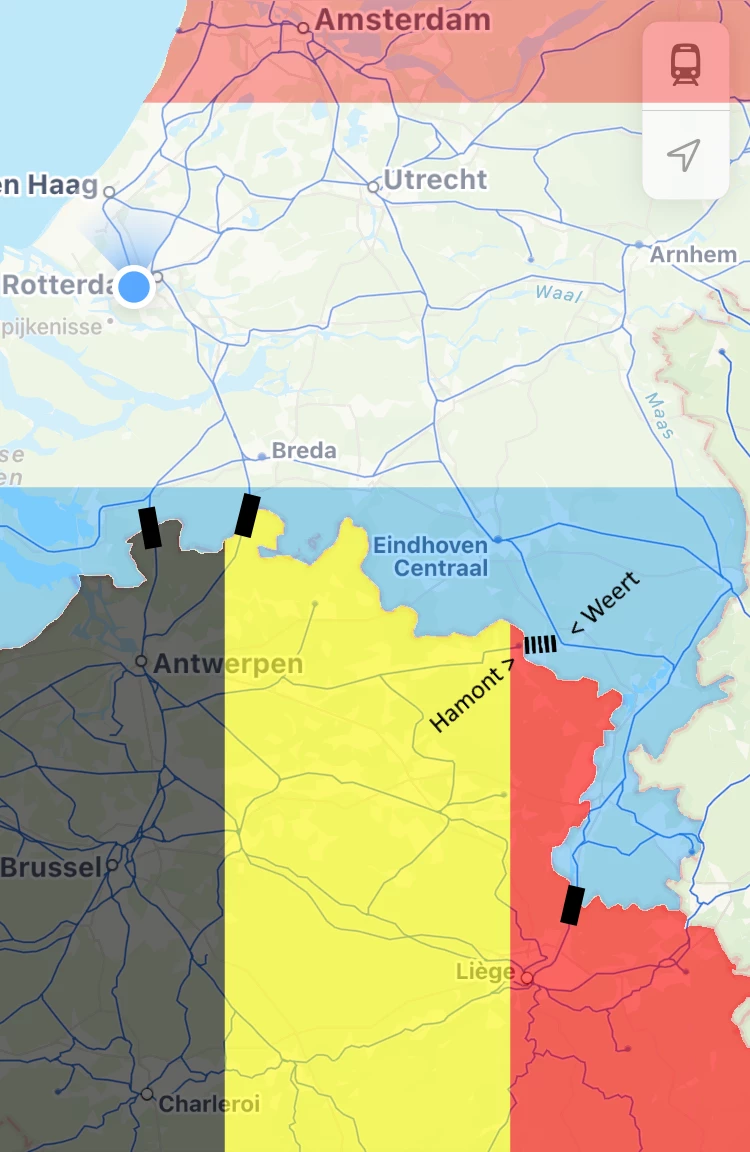
This is how to go:
- In Belgium, take the (hourly) train to Hamont, the very last station on the line from Antwerp
- Walk for 30 minutes from Hamont to the village of Budel-Schoot
- Take the bus from Budel-Schoot, Vogelsplein, to either Weert or Maarheeze (continuing to Eindhoven), for opproximately 15 minutes (note: not included in your pass, your bank card works as smartcard-ticket these days)
- And continue your journey by train.
This can also be done vice versa for Netherlands to Belgium. Google will give you the itinerary as well as timings of trains and buses. I did it myself in the dark 2 days ago.
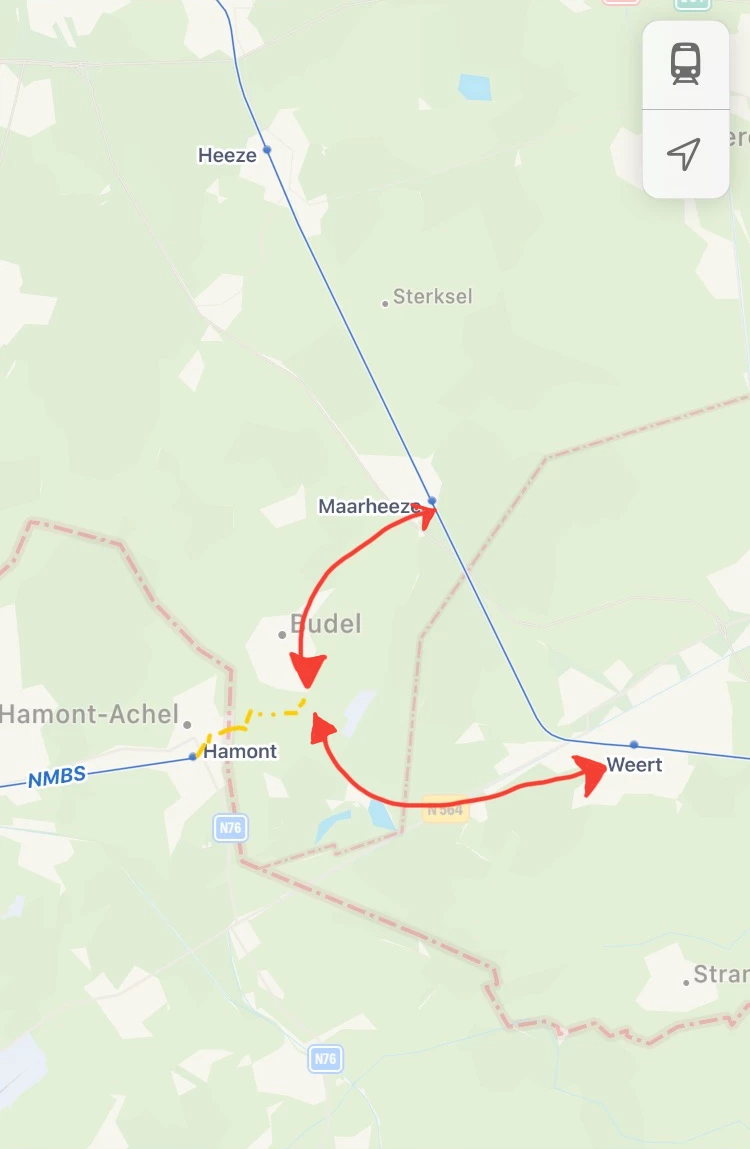
As the track is connecting Hamont to Weert, I personally prefer the bus to Weert. From the bus, you will actually see some glimpses of the track, as well as the factory why that line still exists in the first place.
This trajectory will show you the local places that you would otherwise not get to.