

If you use any rail travel planner to find a route from Wien (Vienna) to Sweden the result is: Go to Hamburg in Germany first. Then enter Denmark at Padborg, cross the Storebælt and take in København a train, which takes you across the Öresund to Sweden. GPS shows me the geographic longitude at home is 16,39° East. A straight (in spherical geometry) line north at this longitude traverses the Czech Republic, meets the Baltic Sea in Poland, touches Öland Island and hits the Swedish mainland in Kalmar län (county), somewhat north of Kalmar. With reasonable deviations of about ±200km railways and the Baltic Sea ferry from Gdynia to Karlskrona follow this line. So this is definitely the shortest route from Wien to Sweden. Problems of DB with delays had for us already 2024 been an argument to travel by ferry across the Baltic Sea to Sweden.
The recently introduced Baltic Express connection from Praha via Wrocław to Gdynia made it possible to avoid the detour via Warszawa. Czech Railways ČD now give several express trains on identical routes the same train name. So all railjet trains between Wien and Praha now have the name Vindobona in the Czech Republic. Vindobona was the name of a Roman army fort at the place were later Wien, in historic Latin language documents often spelled latinized Vienna, developed. From 1957 to 2014 an express train between Berlin (before the fall of the Berlin Wall Eastern Berlin) and Wien was called Vindobona. I remember well the iconic class 175 diesel multiple units of DR, the railways of the German Democratic Republic in the 1970s.
The first train of our journey to Sweden was the railjet 70 (which had not only the historic name Vindobona, but also its train number from the 1970s). We intended to travel on this train, departing at 7:10 from Wien Hbf. to Pardubice, where we had to wait 1 hour 43 minutes for our connecting train. As I had used my ÖBB account for making a seat reservation (which was not compulsory) they had my email address linked to this reservation and I got an email saying a different trainset will be used and travellers with reservation should contact the train staff. Later I got an email that the train is 10 minutes delayed and when we already waited for the train on the platform another one saying 30 minutes delay, on the departure board this changed soon to 40 minutes. The EC108 to Warszawa, scheduled departure time 6:10 had also an enormous delay and when it looked from the departure screen that this train would depart soon we went to the other platform, as we saw a chance to reach in Břeclav the EC280 from Budapest which could us bring to Pardubice in time. Downstairs in the station hall the departure board changed again and we and other passengers returned to the original platform where our train arrived. Instead of a railjet it was a train composed of ČD intercity carriages. Any electronical display outside and inside showed in alternating languages the text: “The emergency brake has been applied. The train will soon come to a halt.” Probably this had caused the delay. The train was far from full, so it was no problem to find two seats in a second class carriage. We arrived with our departure delay of about 45 minutes in Břeclav where the train crew changed and an another unsuccessful attempt was made to fix the message on the information screens, which increased the delay. Almost one hour after our scheduled departure time on the other track of the platform train EC280 arrived and I asked a train staff member if we should better change to that train, as we need to catch a connection in Pardubice. He answered that our train will depart first and indeed it began to move within a few minutes and more than one hour delay. Finally we arrived in Pardubice where the delay had reduced our waiting time for the EC262 Baltic Express to less than 40 minutes.
In the Baltic Express seat reservation is compulsory for cross-border travel to Poland. We had bought the reservation on the ČD homepage as there other than on the ÖBB page seats may be selected from a seat map. The rather short train was already full with passengers from Praha and seat reservation seems to be essential anyway. In Wrocław the train got more carriages and after departure a PKP conductor checked the tickets. This was the only time in all our interrail travels that a ticket inspector wanted to see our passports and scanned the Aztec codes on our paper passes. Usually they only looked if the travel day date was correctly written on the pass. We left the train in Gdańsk where was the first stop-over of our journey.
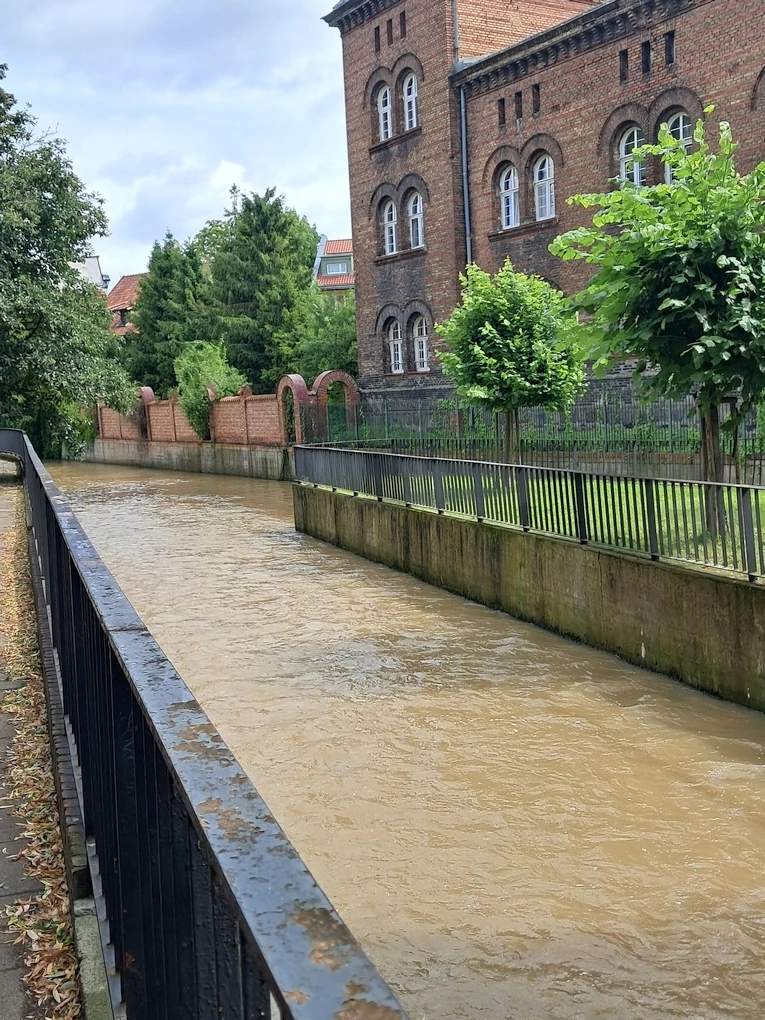
Next day in Gdańsk was heavy rain. We tried a little bit sightseeing, but at noontime we were completely wet despite raingear. In the afternoon which we spent in our hotel room we got an official flood warning for areas near rivers as broadcasted text messages on our phones. The next day the rain had ceased and we could it use for sightseeing as our ferry from Gdynia left in the evening.
Gdańsk, Sopot and Gdynia are often called together the Tri-City. Local transportation in each city is provided by buses, in Gdańsk also by trams and in Gdynia they have also trolleybuses. The entire area is served by the frequent running trains of SKM, a transportation system which would be called S-Bahn in German speaking countries. Interrail and Eurail passes are valid on SKM trains (and of course any PKP trains) between Gdańsk and Gdynia, but we did not want to use a travel day as the fare for this short ride was only about €2.30. The new ticket machines at the Gdańsk main station did not work, at an older machine as well at the ticket office were long queues. I queued at the machine, made something wrong and got only one ticket instead of two. My wife had in the meantime advanced in the ticket office queue and I could her tell in time that we needed only one more ticket. The ticket from the machine was for immediate use, that from the ticket office needed to be validated, what we forgot. One of us then had to go down from the platform again for validation, which was a good idea, as ticket inspectors boarded the train at an intermediate station. SKM is an open system like at home without ticket barriers, but according to a website on tourism in the Tri-City area the locals joke, the number of ticket inspectors on SKM trains is almost the same as that of passengers. From Gdynia main station it is a short (about 300m walk) to the bus stop of bus 133 in Jana z Kolna. The bus runs on weekday every 20 minutes, on weekends every 30 minutes. The final destination of the bus is the Muzeum Emigracj (Emigration Museum) which is also the stop for the ferry terminal. The fare can be paid by touching a contactless card reader with a credit card like in Stockholm, London or several Italian cities.
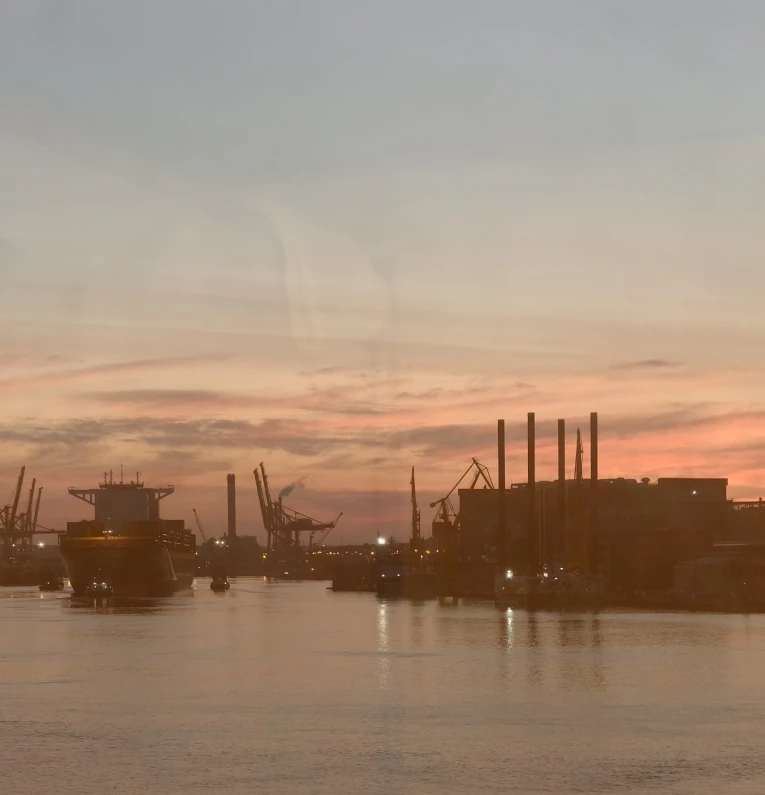
The ferry from Gdynia to Karlskrona in Sweden is operated by Stena Line. Stena line gave 20% discount on the relevant basic fare (adult and senior citizen for us) with an Interrail/Eurail pass. No discount is given on cabin accommodation and any other extras as well as small harbour and environment fees. No travel day is needed when using the pass to get this discount. They have three vessels on this route, Stena Ebba, Stena Spirit and Stena Estelle. In the peak season there were, depending on the date, up to three sailings a day with departure times 9:00, 21:00 and midnight. For the sailing with the Stena Spirit at 21:00 we took, buying cabin accommodation was compulsory and breakfast included in the fare. At check-in in the ferry terminal we were told that there was a problem with the boarding bridge and we will have to use a bus to board the ferry. The bus brought the passengers to the car deck and had then to reverse from board. From the car deck we could use a lift to get to the cabin decks.
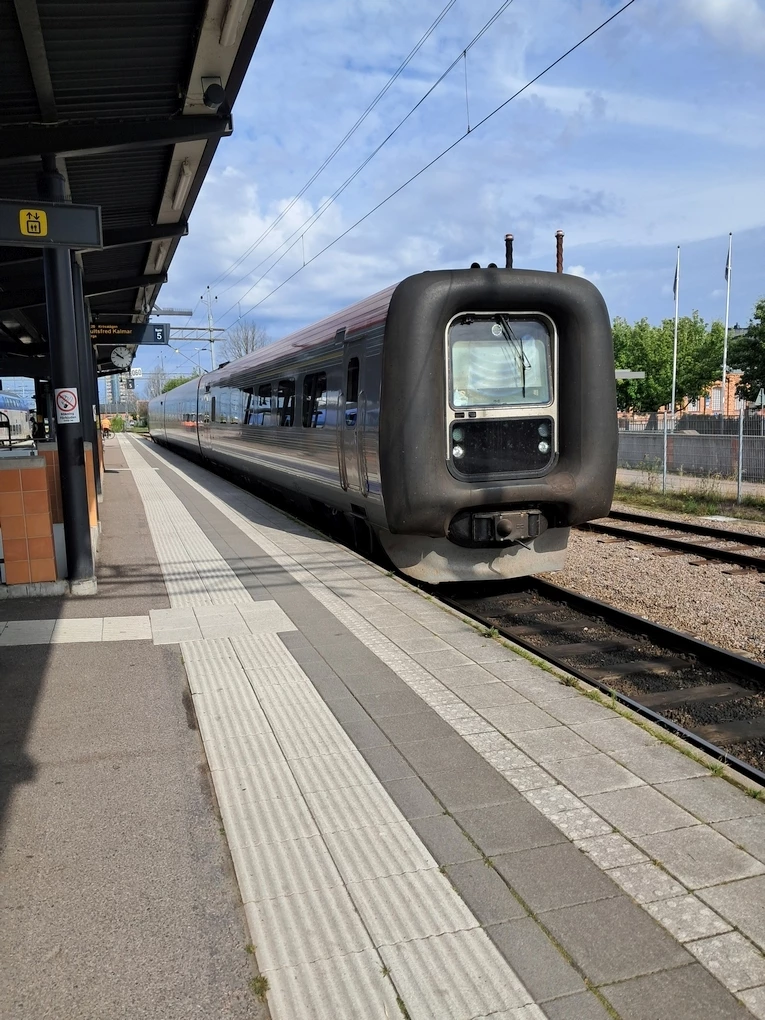
The Baltic Sea was calm that night and after breakfast we arrived at 7:30 next morning in Karlskrona. To go to Karlskrona Central Station from the ferry terminal needs about 30 minutes by bus. The bus runs every 30 minutes. According to the website of the bus operator tickets can be purchased on the bus by credit card, but the bus driver demanded all passengers to get their tickets from a machine inside the ferry terminal building. The bus stops at Bergåsa train station (which might be useful if there is a tight connection to a train as all trains leaving the dead-end station Karlskrona Central call in Bergåsa), continues to Karlskrona Central and reaches one stop later the terminus Karlskrona centrum in Parkgatan. We took from Karlskrona Central the next available Krösatågen service to Emmaboda where we had a short connection to an Öresundståg service to Kalmar. In Kalmar we had to wait about one and a half of an hour for the next train to Linköping via Hultsfred. This not electrified line was operated by Krösatågen with class Y2 or Y31 diesel multiple units. Our next overnight stop for two nights was Linköping, the first town in Sweden where we stayed overnight.
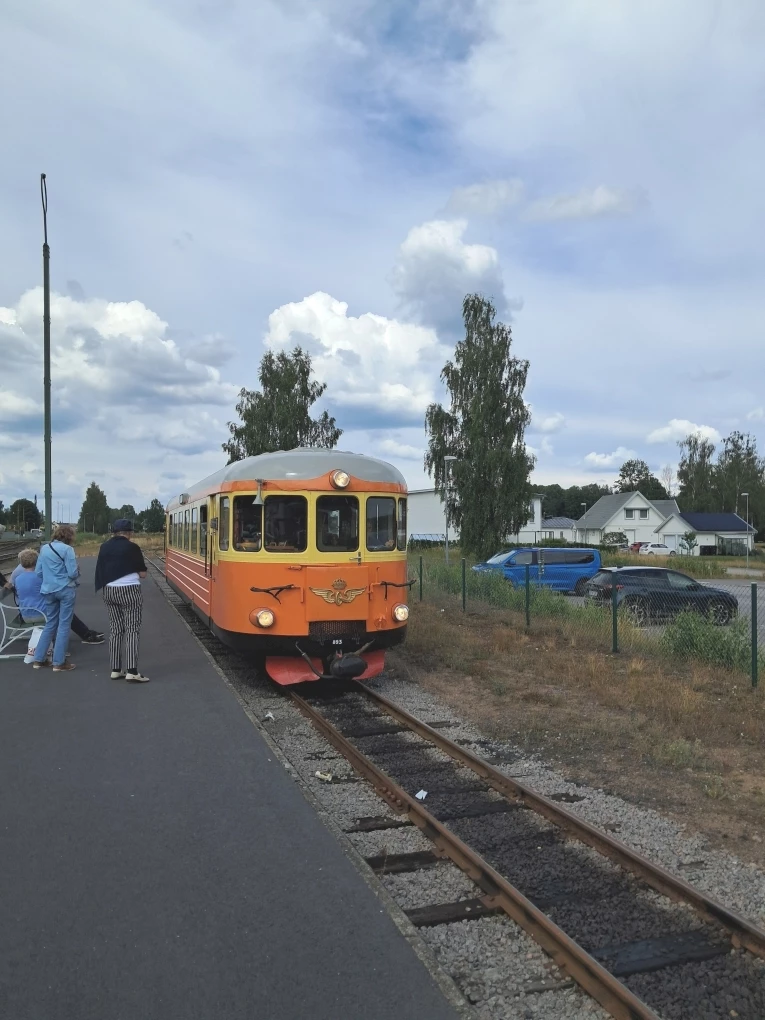
The next day we used for a daytrip to ride the narrow gauge museum line Hultsfred – Västervik (https://www.smalsparet.se/en/). To our surprise Interrail/Eurail passes are valid on this line. See also my post (https://community.eurail.com/eurail-interrail-passes-41/unexpected-routes-companies-where-interrail-is-valid-15249?postid=93113#post93113) in Unexpected routes/companies where Interrail is valid in this forum. We rode the narrow gauge vintage railcar from Hultsfred to Västervik and returned from Västervik on one of the very few daily trains back to Linköping.