

Part 1: The hard-core rail enthusiast trip South to North 2024
Today’s rail connections between Vienna and Trieste
The usual connection now leads to Villach, into Italy at Tarvisio and further on to Udine, where during the last years one had to change to a local train to Trieste. Since the opening of the Koralm tunnel in December 2025 a daily direct railjet service is operated by ÖBB. Additional connections require still changing trains in Udine.
Historically the first railway line between Vienna and Trieste, the main seaport of the Austrian-Hungarian Empire, was the line of the k.k. priv. Südbahn-Gesellschaft (Imperial-Royal privileged Southern Railway Company) via Ljubljana which had lost its importance for through passenger traffic between Vienna and Trieste after the end of the empire. An attempt to revive through passenger traffic was made in 1962 by a direct train but cancelled one year later due to low usage. Since 2021 three coaches of an Eurocity train to Ljubljana continued to Trieste. This service was replaced by the railjet via Tarvisio in December 2025 and the Eurocity train terminates like before 2021 in Ljubljana. From Ljubljana is quite frequent train service to Sežana at the Slovenian-Italian border, not far from Trieste. The website of the Slovenian Railways shows only two of them continuing to Trieste Centrale (with changing to an Italian train with the same train number in Villa Opicina) and one daily cross border shuttle just from Sežana to Villa Opicina. Travelers are advised to check the international timetable finder (the given link leads to the ÖBB website) which trains are actually running as there might be engineering works. Right now (February 2026) only the cross-border shuttle is shown on the ÖBB website. The connection via Ljubljana seems to be problematic in the moment, as there is also no local bus service between Sežana and Opicina and walking is for sure not pleasurable on a road with heavy traffic.
In 1902 the Imperial-Royal Austrian government had launched a program called “Neue Alpenbahnen” (New Alpine Railways) to improve north-south connections in the alpine area and build a new railway line (to be operated by the Imperial-Royal State Railways) to Trieste to break the monopoly of the still private Southern Railway. To travel this line from Vienna to Trieste one has to go to Villach first and continue on a Ljubljana bound train across the Austrian-Slovenian border to Jesenice and use the Bohinj line further on. The Bohinj line, Bohinjska proga in Slovenian, crosses the Julian Alps in the Bohinj tunnel and leads via Nova Gorica to Sežana. In German it is called Wocheiner Bahn, the part south of Nova Gorica sometimes Karstbahn (karst line), in Italian usually the name Transalpina is used. New borders after both world wars brought a decline of traffic on this line and only local passenger traffic remained. The northern part between Jesenice and Nova Gorica is considered to be the most scenic railway line in Slovenia. The very south part of the original line which still exists crosses the Slovenian-Italian border between the stations Kreplje and Villa Opicina. There is now neither passenger nor freight traffic between these stations. Villa Opicina station, now used by all trains from Sežana was originally the Opicina State Railway station. The Southern Railway from Sežana had used the now abandoned Opicina Campangna station. In 1948 a short connecting line from Kreplje to Sežana was constructed to connect the southern part of the Bohinj line, which had been Italian between the then Yugoslav-Italian border in the Bohinj tunnel and Trieste between 1920 and 1947 (years of the relevant treaties), with the Yugoslav rail network.
Trains continuing from Villa Opicina to Trieste Centrale (if they run) use the former Southern Railway line down from the karst plateau to Trieste Centrale. The former State Railway line down to Trieste Campo Marzio is not used by passenger trains any more. Right now railway travellers on the Bohinj line would face the same problems getting from Sežana across the border as travellers from Ljubljana.
An uncompleted report from 2010 can be found on the internet (in German language). The author had walked about 8km from Kreplje station to Opicina along the track. When walking on a paralleling road already after about 4km a stop of the infrequent running Trieste city bus line 42 can be reached. From Opicina the Opicina Tram and several city bus lines provide a connection to the city centre of Trieste.
The most convenient way when traveling the scenic northern part of the Bohinj line is to travel it only between Jesenice and Nova Gorica and take the INT bus from the back side of the station to the Gorizia Centrale station or walk across the border in front of the station building and take the Gorizia city bus number 1 to Gorizia Centrale, the station of the Udine – Trieste railway line. The contribution “More options for border crossings than maps and timetables will tell you!” in this forum could be corrected: Connections with changing between Nova Gorica and Gorizia Centrale stations can be found in the travel planners of ÖBB and DB.
Travelling the Bohinj line South to North 2024
In 2024 my wife and myself had the idea to travel from Vienna to Trieste one way via the Bohinj line and the other via the classical Southern Railway route. As this should be a point to point return trip involving three countries an Interrail Global Pass did not pay. I think the description of our trip is nevertheless of interest for Interrail or Eurail pass users planning travelling Austria, Slovenia and Italy. To add more fun (or craziness) we did not want only to travel the Bohinj line but do the entire trip as far as this would be possible over railway lines which at the time of the Austrian-Hungarian Empire did not belong to the Southern Railway network. It turned out that this would not be possible in a single day and from available connections it would be easier to do the return trip over former Imperial-Royal State Railways lines and travel to Trieste with the direct train via Ljubljana over the former Southern Railway line.
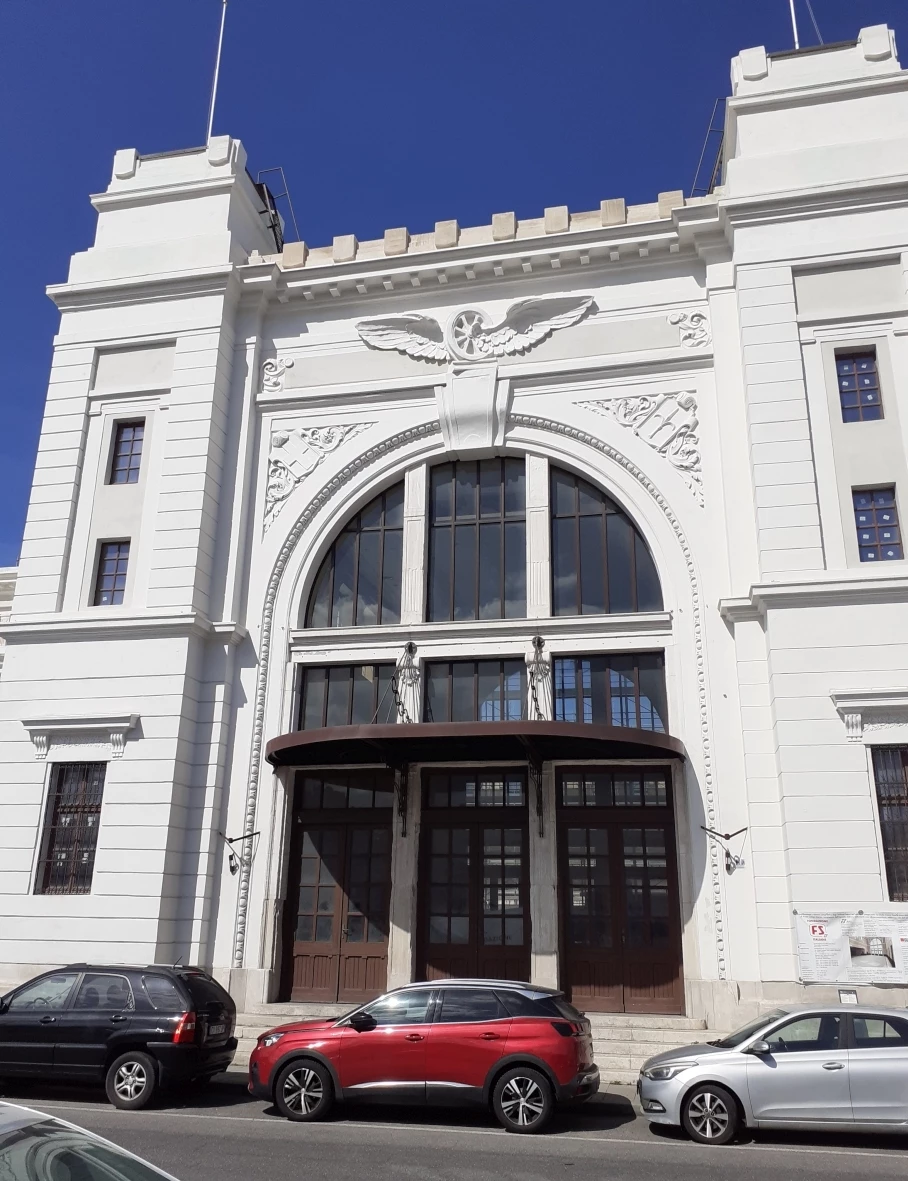
As there are no trains leaving any more from Trieste Campo Marzio station and we wanted to avoid the former Southern Railway station Trieste Centrale, we decided to start our return trip from Villa Opicina, the former Opicina State Railway station. The Opicina tram was not yet running in 2024 so we took bus No. 4 to Opicina.
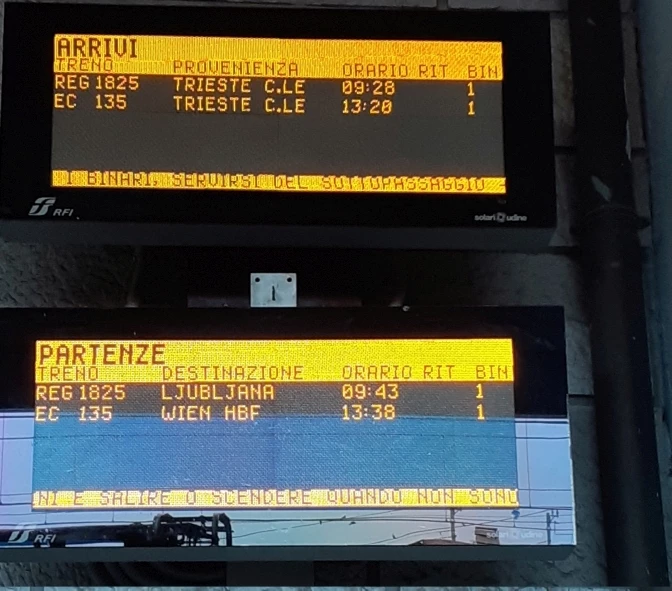
Inside the station building was a waiting area with an obviously permanently closed ticket counter and screens showing the arrival of the next two trains from Trieste Centrale and their departures to Ljubljana and Vienna (Wien Hbf.). A few more trains not yet shown were scheduled for the afternoon and on platform 1 a Slovenian Railways’ Stadler FLIRT trainset was waiting. The train conductor came into the waiting area and announced the four waiting passengers the train to Ljubljana was ready for boarding. The train from Trieste Centrale arrived (but not on platform 1 as announced on the screen) and its passengers had to change to the Slovenian train, which kept the same train number. After an 11-minutes ride to Sežana (the only stretch of a former Southern Railway line we travelled on this trip) we changed to the train to Jesenice. The destination of the most trains is Nova Gorica where usually after a long a waiting time a train to Jesenice departs. We took the only train this very day which covered the entire line to Jesenice, but train replacement service by bus was announced between Most na Soči and Podbrdo. Between Opicina and Sežana and further on to Nova Gorica the trains travel through the typical karst landscape. After about one hour travel time we arrived in Nova Gorica where the train had a layover of about 20 minutes.
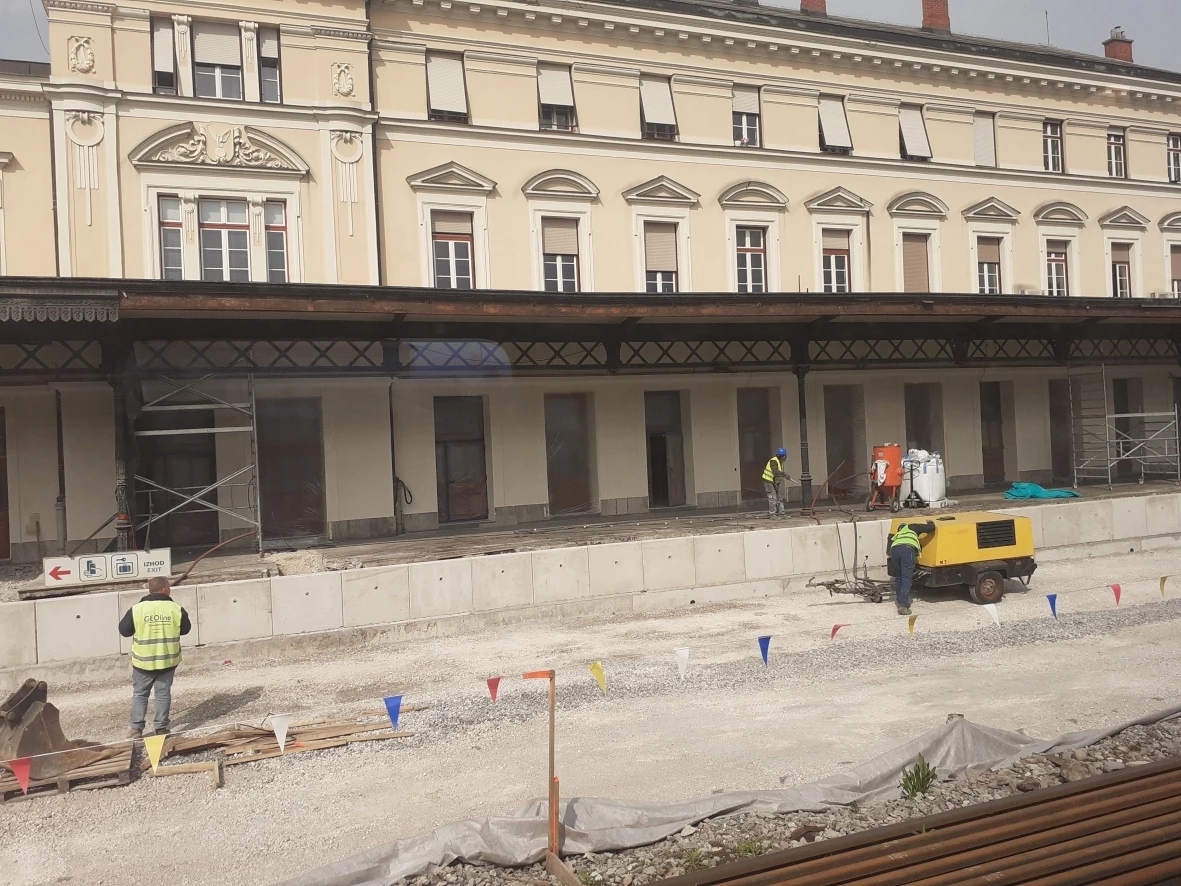
The Nova Gorica station was a large construction site, new platforms were built and new tracks laid. When Nova Gorica together with Gorizia was to become one of Europe’s cultural capitals 2025 everything should be ready. North of Nova Gorica the Bohinj line follows the river Soča, also known under the Italian name Isonzo. A few kilometres north of Nova Gorica after the Solkan station the railway line crosses the river on the Solkan bridge (or Salcano bridge), which was blown-up by the retreating Austrian-Hungarian army during the First World War in 1916 and rebuilt by the Italian railways in the years 1925 – 1927.
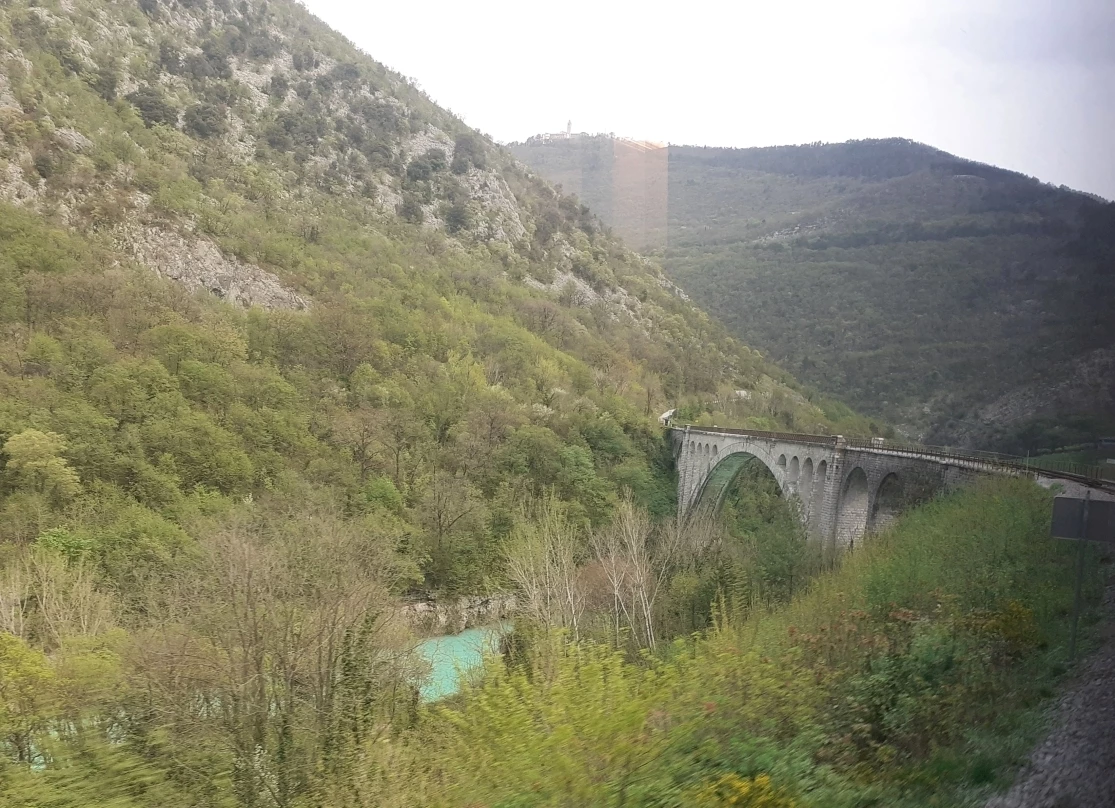
In Most na Soči we had to leave the diesel powered Stadler FLIRT trainset and change to the rail replacement bus. Here the railway line leaves the Soča valley and follows the river Bača. While the railway lines runs down in the valley alongside the river, the narrow and winding road leaves the valley and runs through villages up in the mountains. The bus ride was an adventure of its own. The bus driver was obviously experienced with such kind of roads but not familiar with this one, because he reached the Podbrdo station only with the help of knowing passengers. In Podbrdo a Fiat railcar, over and over “decorated” with graffiti waited, and soon we proceeded into the Bohinj tunnel. The line passes Lake Bled on its way to Jesenice. I do not think that Led Bled is known by many Austrians and for me it is just one of several lakes in the Alps, of course a very scenic one. But on the British Isles and in some other countries the lake must be something very special. Mark Smith, also known as The Man in Seat 61, has titled a section of his website “London to Lake Bled & Ljubljana” and just one hour after I had finished the draft of this contribution I received an email saying I was awarded the Lake Bled badge by the Eurail Community Team for six of my previous comments in this forum.
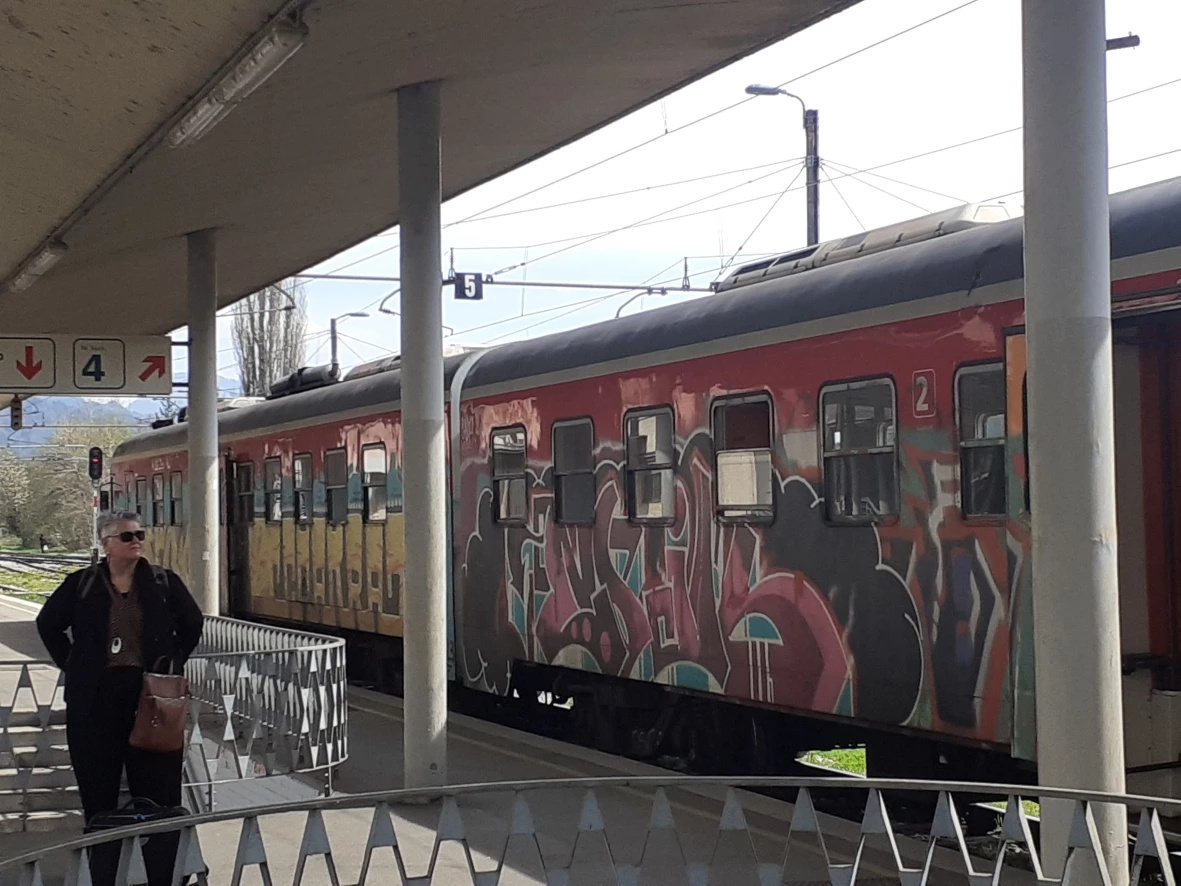
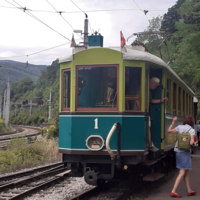
The train from Podbrdo after arrival in Jesenice. (The visible person, my wife, has given permission for publication of the photograph in the Eurail community forum.)
Due to the replacement bus ride we arrived in Jesenice with about 30 minutes delay, but this only reduced our connection time for the train to Villach three hours after the scheduled arrival. The Jesenice station is an impressive piece of architecture from the time of the Socialist Federal Republic of Yugoslavia. The building is not in a good condition and reportedly it will be replaced by a modern station building in the next few years. Strange for the traveller is that there are no departure boards or screens and nowhere is displayed from which platforms the trains depart. Finally for this day a train from Zagreb brought us through the tunnel in the Karawanken mountain range to Villach in Austria where we stayed overnight.
The next day we made it to reach Vienna via routes operated by the State Railways at the beginning of the 20th century. The first leg was from Villach to St. Veit/Glan via Feldkirchen. The mainline Villach to Klagenfurt had been part of a Southern Railway branch line from Maribor to Franzensfeste (Fortezza) in South Tyrol. In St. Veit/Glan we changed to a local train to Friesach where we had to change to another local train to St. Michael. Next change in St. Michael was to the Graz – Saarbrücken Eurocity train, which in this stretch provided also local services. We left the Eurocity train in Selzthal and changed to a regional express on the Pyhrn line to Linz. The single track Pyhrn line was part of the “Neue Alpenbahnen” program and had probably experienced one of the days with the highest number of trains in its history this very day. Due to a closure of the Semmering line a large number of freight trains and two railjet trains were diverted to the Pyhrn line and as the Enns valley line was blocked by a landslide it got some more trains. Despite this, our train reached Linz in time where we changed to a Westbahn train to Vienna. Five times changing trains in one day seemed us to be enough, so we accepted the Westbahn train going via the new high speed line and did not change a sixth time in St. Pölten to a local train using the route which existed already at the time of the Imperial-Royal State Railways. The Westbahn train arrived like the local trains at Wien Westbahnhof (Vienna West Station) and not at the Hauptbahnhof (Main Station) which is situated near the location of the former Southern Railway station and is reached by ÖBB long distance trains from Linz via former Southern Railway tracks on the last few kilometres.