

Part 2: The scenic and easy Trip North to South 2025
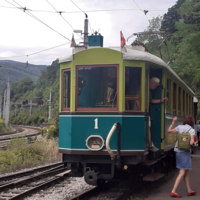
Other than the hard-core rail enthusiast trip described in Part 1 we would recommend this route to users of an Interrail or Eurail pass intending to travel Austria, Slovenia and Italy. The most scenic sections are the Simmering mountain pass in Austria and the Bohinj line in Slovenia. Other as suggested in the title our trip included some parts which were in the days of the Austrian-Hungarian Empire owned by the Southern Railway Company (Wien Hbf. – Bruck/Mur, Klagenfurt Hbf. – Villach Hbf., and Gorizia Centrale – Trieste Centrale). Villach can also reached from Salzburg via the Tauern line, also part of the “Neue Alpenbahnen” program. Seat reservation is not compulsory in any of the trains needed. However, it might be useful to reserve a seat in Vienna – Villach trains at peak travel times.
We started at Wien Hauptbahnhof (Vienna Main Station) with an Intercity train to Villach. The train took the scenic Semmering route constructed by Carl Ghega, part of the first railway line from Vienna to Trieste. The Koralm tunnel was not yet opened in spring 2025 and the train left the historic Southern Railway route in Bruck/Mur and proceeded via Leoben, St. Veit/Glan and Klagenfurt to Villach. Since December 2025 most trains from Vienna to Villach are routed via Graz, the Koralm tunnel and Klagenfurt. There are two daily Intercity trains going via Leoben, St. Veit/Glan and Feldkirchen, bypassing Klagenfurt.
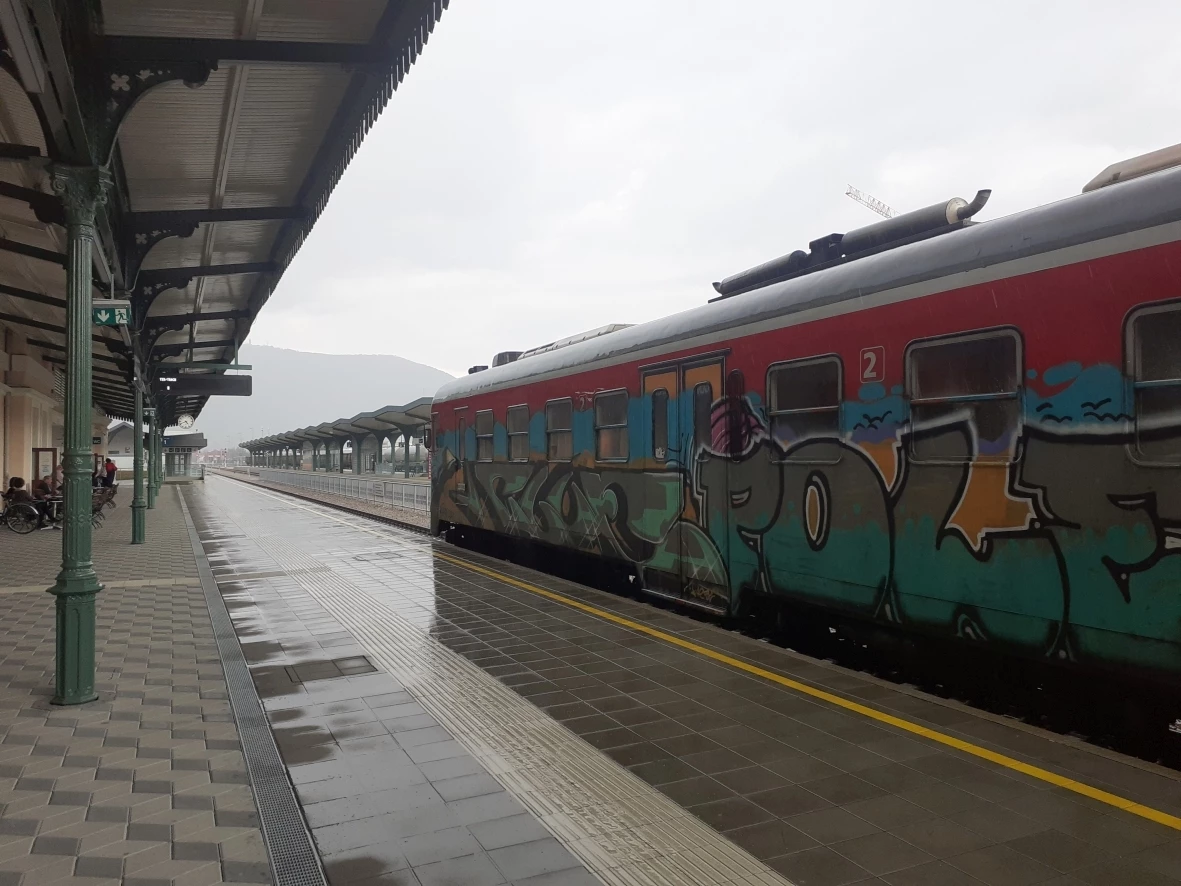
Like so often also this time was rail replacement service for a part of our trip, this time from Villach to Jesenice. The bus left Villach with about 10 minutes delay and passed the Karawanken mountain range and the Austrian-Slovenian border in the Karawanken motorway tunnel paralleling the railway tunnel. As stated in Part 1, there is no information in Jesenice station from which platform a train departs. A friendly traffic manager gave us directions and we boarded the train, like last time a Fiat diesel railcar over and over with graffiti.
The train passed Lake Bled and arrived after passing the Bohinj tunnel in Podbrdo. This time we could stay on the train travelling in the valley of the river Bača.
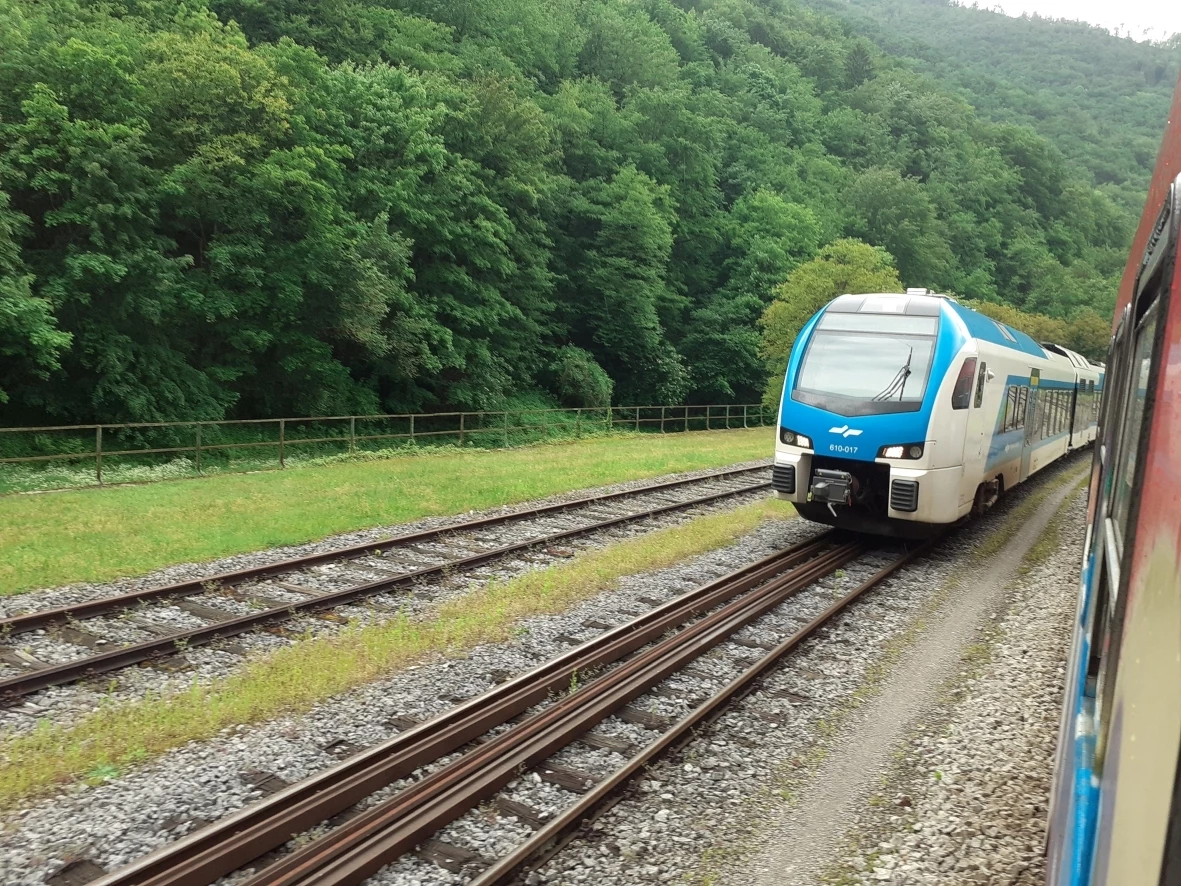
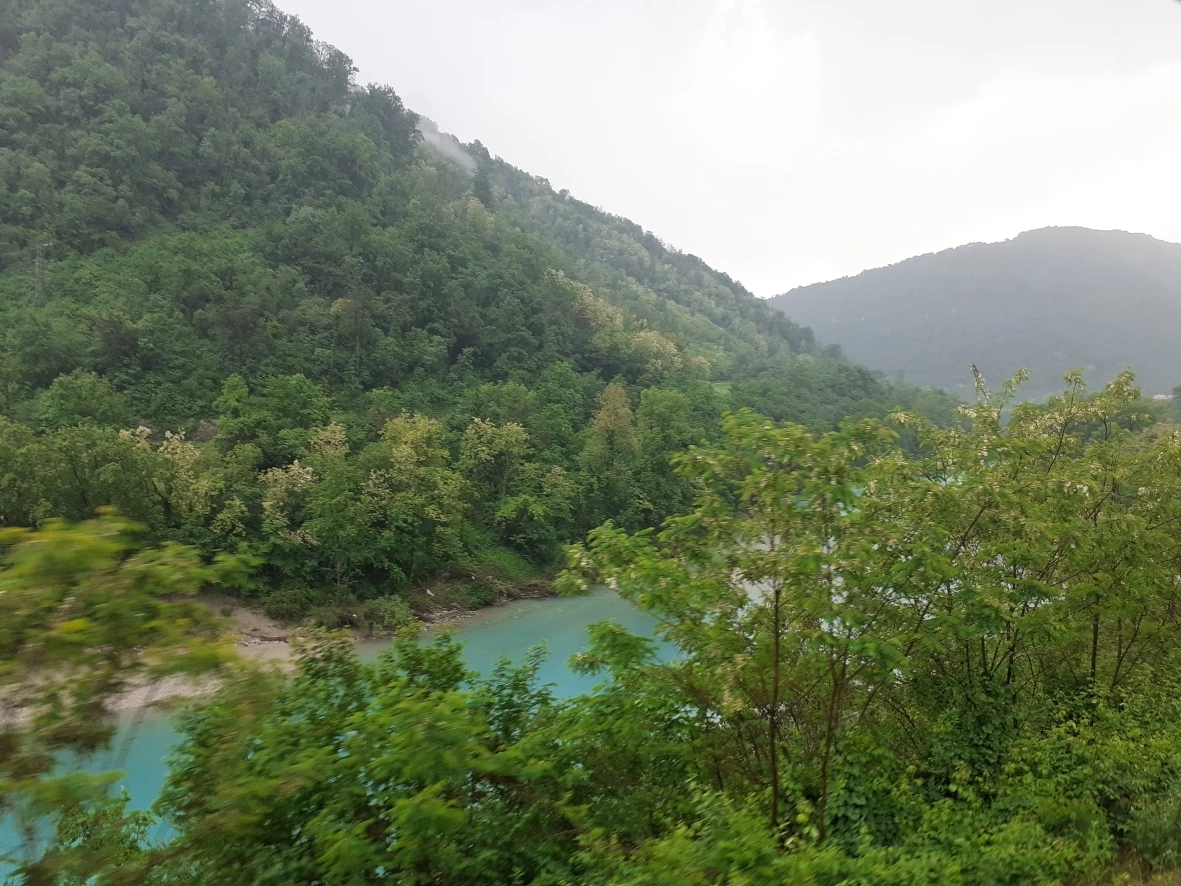
As this is a single track line we had to wait some time in Grahovo for a northbound train before we could continue to Most na Soči. The train then runs along the bank of the river Soča (Isonzo), first on the left, later on the right bank, and passes several short tunnels and galleries.
About 3km north of Nova Gorica the line crosses the Soča (Isonzo) on the Solkan (Salzano) bridge to the left bank again. The river then passes the Slovenian-Italian border and makes its way to the Adriatic. A Stadler FLIRT of the Slovenian Railways on the Solkan bridge is shown on the title of the summer 2025 printed edition of the European Rail Timetable.
The new border after the Second World War was drawn in such a way that the railway line stayed in Gorizia/Gorica on Yugoslav territory, with the station square cut into two parts by the border. At the beginning secured by barbed wire, later by a fence, which had vanished with EU and the Schengen agreement. On the Yugoslav side of the border the city of Nova Gorica was developed. At heavy rain we reached the Nova Gorica station, the terminal station of our train. Under the title “GO! Borderless” was Nova Gorica together with Gorizia one of the European Capitals of Culture 2025. (The other one was Chemnitz in Germany.) The station had been a construction site at our visit 2024, now new tracks were laid and new platforms connected by an underpass were built.
To continue our trip we now had to change from the Slovenian Nova Gorica station to the Italian Gorizia Centrale station. In the days of the Austrian-Hungarian Empire this would have meant to change from the Görz State Railway station to the Görz Southern Railway station (Görz is the German name of Gorizia or Gorica, respectively). There exists a railway link between the two stations circling south around the city which was never important for passenger traffic, as the straight way through the Gorizia city centre is much shorter. GO! Borderless 2025 brought two daily trains on Saturdays, Sundays and Italian public holidays from Nova Gorica via Gorizia Centrale to Venice using this link. The trains continue to run in 2026. In From 1909 to 1935 a tram line connected the two railway stations directly through the city centre, which was then replaced by a bus. To catch this bus (line 1) one has to leave the station building to Trg Evrope (Europe square), cross the international border in the middle of the square where it becomes the Piazza della Transalpina and go to a bus stop in via Foscolo or via Caprin. You may buy the ticket with the TPL FVG app (which is also useful in Trieste) or use your credit card to touch-in at the card reader onboard.
We used the other option, the bus named INT departing from the back side of the station which stop can be reached via the underpass connecting the platforms. The bus runs every 30 minutes and connects the Nova Gorica bus station, the Nova Gorica railway station, and the Gorizia Centrale railway station. Other than on the Gorizia city buses tickets can be purchased from the bus driver. Only card payment is accepted, but tickets for several people may be bought with one card. Fortunately there is a shelter at the bus stop, as the rain had not stopped. The same bus stop is used by buses of both directions, so be sure to board the correct bus. The name of the bus stop at Gorizia Centrale railway station is officially Centro Intermodale Passeggeri (CIP) which is sometimes found in timetables. From Gorizia Centrale we took the next available local train to Trieste Centrale, which we reached at dry weather. Local trains run at least hourly, in the afternoon every 30 minutes and need around 50 minutes to Trieste, depending on the number of intermediate stops.
During our stay in Trieste we made a day-trip to Gorizia and Nova Gorica at dry weather, were I shot the photographs shown here. Nova Gorica station has now a platform at the station building and a new island platform, connected by an underpass which also leads to the parking lot at the backside of station, where the INT bus has its bus stop.
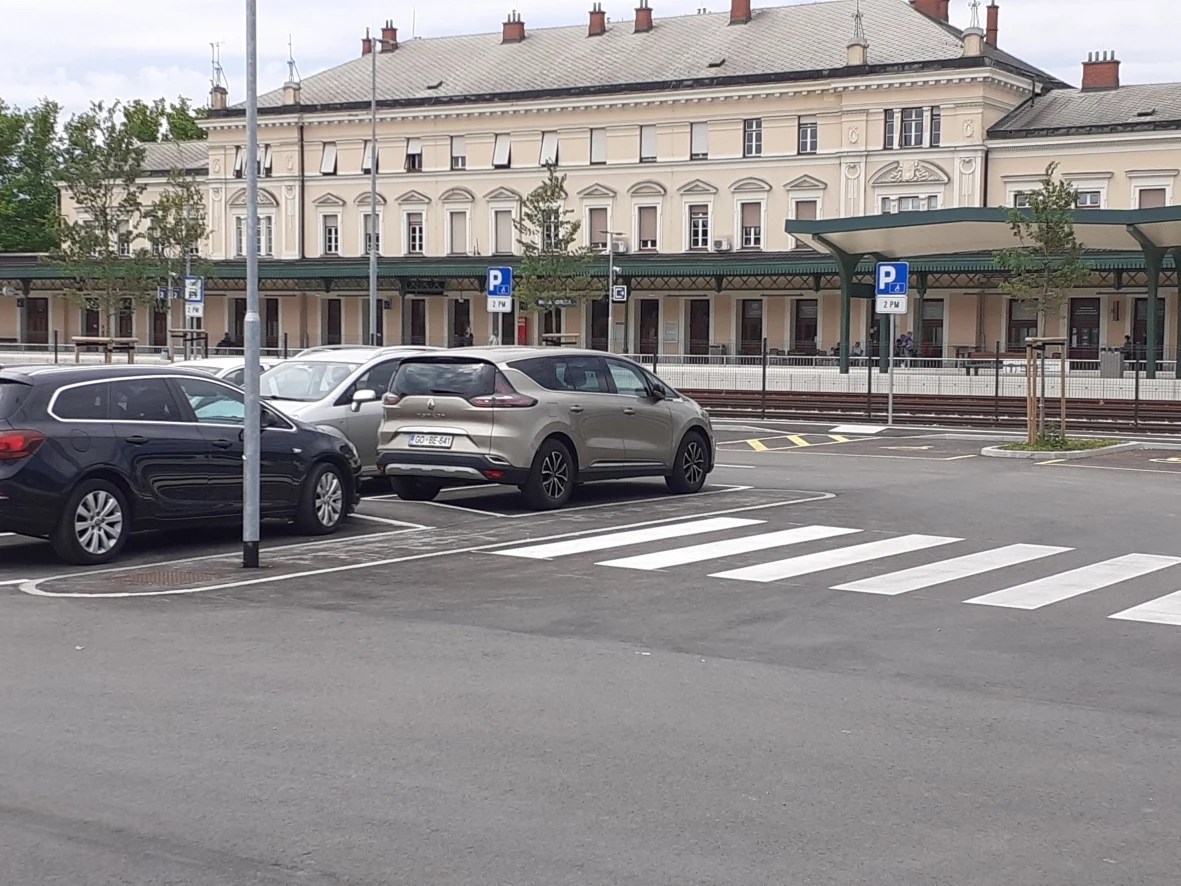
The square in front of the station building which was divided by a fence at the international border until 2004 can now be freely crossed by pedestrians. Note that despite EU and Schengen agreement carrying a passport or other valid travel document is required by law to cross an international border. The station square is called Trg Evrope, Europe Square, on the Slovenian side and the part located in Italy Piazza della Transalpina (Transalpina Square, after the railway line).
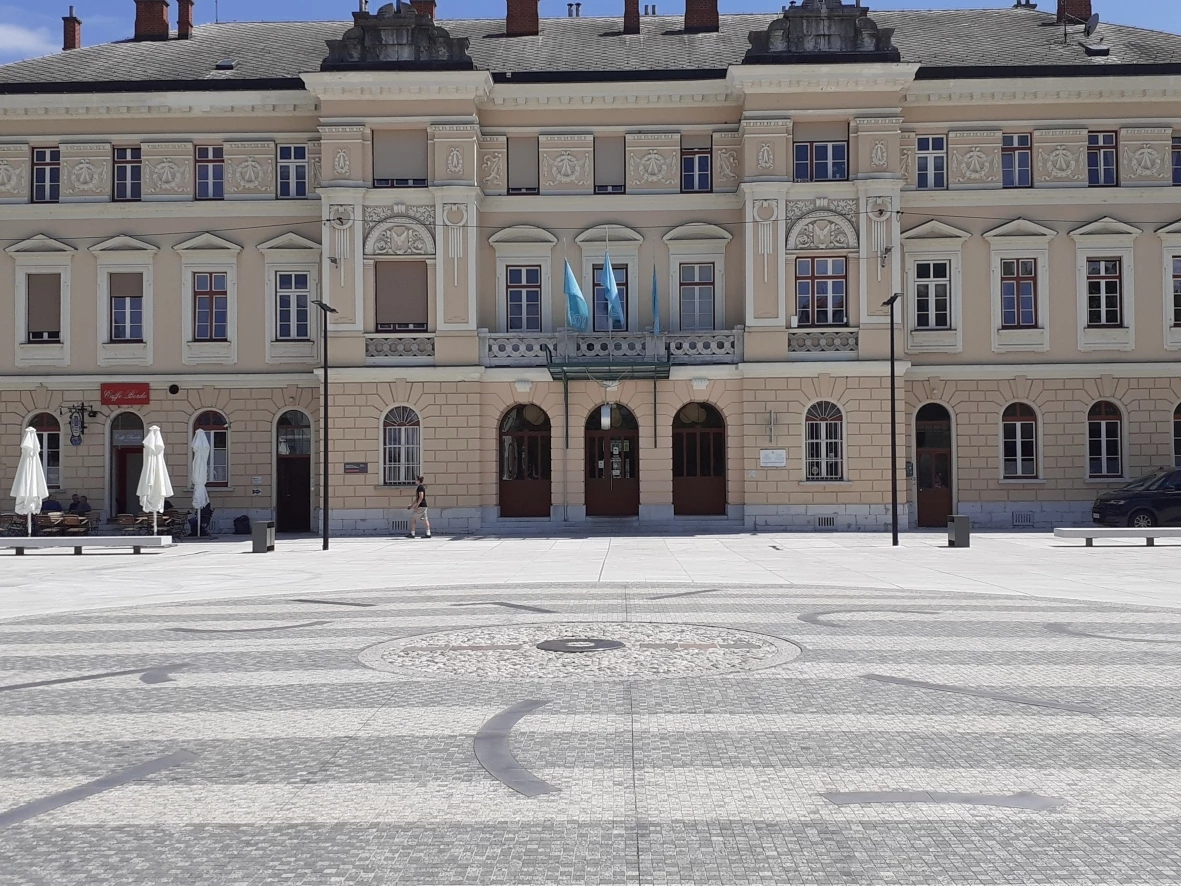
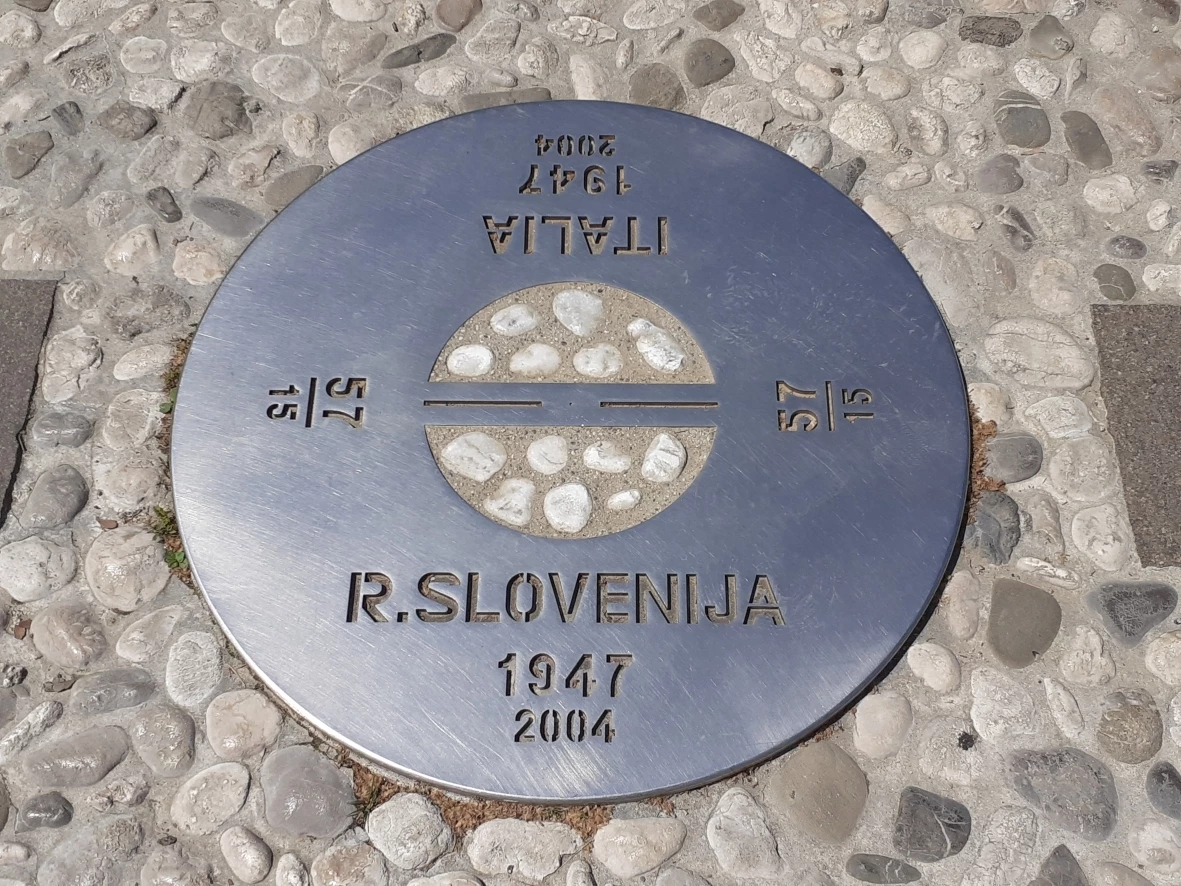
In the centre of the square the location of the actual border line is marked by a plate remembering the years of closure and reopening of the border. The number 57/15 on the plate is the identification number of a stone border marker from 1947 near this place.
To travel home to Vienna this time we used a local train from Trieste to Udine and changed there to an ÖBB railjet service to Vienna.